If conformity is the disease, then the symptom is the legions of Ivy League grads going into management consulting, Wall Street and corporate law firms. Students compete for markers of success. They “get into” Goldman the same way they got into Harvard. But once we “excellent sheep” run out of things to strive for, we find ourselves incomplete as people.

Sunday, September 28, 2014
Baaa: In Defense of Excellent Sheep
If conformity is the disease, then the symptom is the legions of Ivy League grads going into management consulting, Wall Street and corporate law firms. Students compete for markers of success. They “get into” Goldman the same way they got into Harvard. But once we “excellent sheep” run out of things to strive for, we find ourselves incomplete as people.
Monday, August 18, 2014
Boyhood: Filmed Introspection
![]() |
| Mason playing Oregon Trail on an iMac |
Though we Millennials appreciate Linklater's affirmation of these cultural milestones, the true nostalgic effect of the show lies in Linklater's sharp portrayal of childhood perception and teenage introspection.
Mason's young life is a familiar one--parents get married too early, get divorced because Dad (Ethan Hawke) was irresponsible; Mom (Patricia Arquette) gets remarried; Mason and his sister must juggle a dual-household life and lots of moving around Texas. Yet, Mason's real story is not what happens to him and his family, but what happens inside his head. Linklater's genius lies in his ability to capture on film the unique perspective of children observing adults.
After their first visit with Dad, Mason and his sister get dropped back off to a beleaguered Mom, who asks Dad whether the kids ate dinner or did any homework. Since they had just spent the entire afternoon at the bowling alley, the answer is clearly no. When Mom asks to speak with Dad alone outside, the kids scramble to a second floor window to peek at the fight. Excitement slowly melts from their faces as they watch the chances of Dad staying over fall with each word he says.
In a later scene, Mason's meets one of Mom's professors. As Mason runs out of the classroom when the introductions are over, he hears the professor ask, "Is Grandma free to babysit?" Mason turns around, his suspicions raised. The camera stays low, adopting Mason's perspective as he sees his mom interact with this potential suitor. Viewers are reminded of that simultaneous sense you had as a child that you're missing something while knowing that something important is happening.
Once Mason becomes a teenager, he starts to express himself using words. In its second half, Boyhood resembles Linklater's Before Sunrise trilogy. It features the free-flowing, partly improvised dialogue between Mason and Ethan Hawke, Mason and his girlfriend, and Mason and his college friends. Mason first meets his girlfriend Sheena at a sprawling pool party where the two go off to chat away from the crowd. She finds him "weird," but enjoys listening to his worldview anyway. I became nostalgic for those teenage conversations where you think you're the first to come up with a supposedly profound idea. In the final scene, Mason's new college friend muses that it's not about us seizing the moment, but that moments seize us. A hokey, high statement this may be, it perfectly evokes the optimism and introspection of teenagers on the brink of adulthood.
Saturday, December 21, 2013
Year in Reading: 2013
Tenth of December by George Saunders. I'm glad I read this book in January cause I've had an entire year to rave about it at everyone I talk to. He reminds me of reading David Foster Wallace for the first time. Each story in this collection comments on some aspect of contemporary society in a completely unexpected way. My favorite, "The Semplica Girl Diaries" takes place in some parallel/futuristic US. People buy Semplica Girls--girls rescued from developing countries--and string them up on their front lawns as status symbols. The metaphor is clear, yet completely surprising.
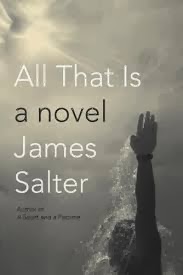
All That Is by James Salter. "James Salter is a revered writer. Can he become a famous one?" A New Yorker profile asked earlier this year. After reading his latest--and possibly last--novel, I definitely understand why he is revered but perhaps not famous. It follows the life of William Bowman through World War II, college, marriage, divorce, and aging. For a novel that takes place over forty years, not too much happens. Instead, Salter makes sharp observations about each stage of an American life. Wednesday, March 27, 2013
Travels with iPhone
The wifi in Istanbul was fast and plentiful. As a result, we found ourselves asking for wifi passwords at cafes and restaurants even before we sat down. Hooked up to the internet, we checked email. We posted Facebook statuses in real time and we "liked" them immediately. Yes--8,200 miles away from New York City, we were replicating what we did at home. The tableau was often three girls on their iPhones, ignoring the plates of borek, pilav, and kofte in front of them, posting pictures of the Bosphorus view behind them.
| We took pictures of food before eating |
Why did we feel this compulsion? Partly to provide evidence that we were there; partly to get validation from them that what we were doing was cool; partly to capture a moment so that we could remember it later. But what is it about the smartphone that ignites this sudden desire to document? I literally have no photographs from a trip to Paris two years ago since they lie undeveloped in a disposable Kodak at the bottom of a suitcase. Was that trip somehow less real than my recent trip to Istanbul? It was certainly more personal. None of my friends “liked” it; I didn’t use the internet at a café once. My memories of the trip are mine alone, unmarred by a camera lens.
Because shooting and sharing has become so common in real life-- pics or it didn't happen as everyone knows--the act of taking pictures on vacation is more ordinary too. The once rare ritual of cleaning off the bulky Nikon has transformed into the smooth motion of tucking your phone into a pocket. The ubiquity devalues the vacation pic. Scrolling through my phone, it looks like I have at least two pictures of everything I saw. I chose my shots carelessly, knowing each new image only cost a minuscule slice of memory. I was at once pleased to be able to take so many pictures while also anxious that my compulsion was detracting from fully being there. I couldn't mentally check off a destination until I had achieved an adequate shot.
| In Istanbul or NYC? |
The irony is not lost on me. The very action designed to prove I had been somewhere ended up distracting me from being there.
Why couldn't I help myself? After all, my Hagia Sophia pictures are surely worse than most professional ones just a Google search away. Why do I feel the need to clutter my friends' Facebook feeds with my own poorly lit pics? Perhaps I am driven by the specter of the negative inference. Now that everyone has a smart phone, the absence of documentation could suggest that something didn't happen. Pics or it didn't happen takes on a literal meaning when pics are so easily available.
| My amateur picture of the Blue Mosque |
Monday, June 25, 2012
Why Plays are Better for Feminism than Magazine Think Pieces
![]() |
| Beth Dixon, Virginia Kull, and Amy Brenneman |
Catherine reconnects with two friends from grad school, Don and Gwen, who are now married with two kids. Don now supports the family as a dean of the liberal arts school while Gwen stays home with the kids. This sets the stage for all three to brutally examine the choices they've made over the past two decades. Who is more fulfilled: the mother or the career woman? Throw in some grad seminar sessions between Cathy and a twenty-one year old female college student, and Gianfriddo manages to cover the whole spectrum of contemporary feminist issues while avoiding the traps of the magazine think piece format.
Gwen makes an offhanded observation at the beginning of the play: that as a fortysomething, she has reached the point of her life where she starts to question the life that could have been. By the end of the play, some women are in relationships while others are single. Gionfriddo doesn't say which position is better. It's this retreat from agenda pushing that makes Rapture Blister Burn more effective than any blog post on women's issues. It raises the issues in a compelling way, and leaves it to us to think about the answers.
Monday, April 30, 2012
Can Girls Escape Sex and the City's Shadow?
![]() |
| Girls: Allison Williams, Jemima Kirke, Lena Dunham, and Zosia Mamet |
If Girls is supposed to transcend Sex and the City, why are we talking about it in the same way?
I have a couple theories about this, neither of which bodes well for the future of women on TV.
First, maybe Girls is fundamentally not that different from Sex and the City. The four women here suspiciously resemble their older counterparts. Hannah, the main protagonist is--like Carrie--a writer of essays based on her life, often a mess who relies on her friends (asking Marnie to make her an STD test appointment), and self-obsessed ("I may be the voice of my generation"). Marnie, like Miranda, is the hypercompentent best friend with a boyfriend who loves too much. Jessa--the only blonde--is promiscuous in a Samantha-like way. She has HPV and isn't afraid to admit it ("All adventurous women do.") Finally, Shoshanna is an even more naive version of Charlotte, admitting she's a virgin in the second episode. These similarities worry me. Can women only be portrayed as either lost and confused, scoldingly bitchy, slutty, or innocent?
The show is also similar in its ambition to SATC. It tries to explore female agency by showing women having sex. Where Sex and the City tried to show women as powerful exercisers of their right to sleep with whomever they want, Girls shows how female agency has resulted in a hook up culture. Both shows must linger on the sex scenes to get its point across. No one really had as much guilt-less sex as Samantha, and no one really has as much awkward sex as Hannah (at least not with one partner), but that's not the point. But it does make me wonder: is examining their sex lives the only way we can say anything about women?
Second--even if Girls is really doing something different from its predecessor--maybe the state of the world hasn't changed much. The objections today to Girls echoes the objections critics had to Sex and the City because society feels the same way about women on TV the same way then as it does now. Some of this is good because it shows that critics had high expectations from Dunham. You don't see the same scrutiny of 2 Broke Girls. Because of the dearth of women on TV, people project all their hopes onto a female-led show. Most of the critiques are rather PC, claiming that the show completely white washes Brooklyn. These are fair criticisms, but they also illustrate the problem that audiences are more willing to critique shows with women simply because there are so few of them. There was never any rage over Entourage's all-white ensemble because there are enough shows by men out there featuring men of color (mostly The Wire).
More worrisome are the critiques from feminist circles. In 1999, Wendy Shalit, a conservative feminist, wrote that Sex and the City is "a lament for all things of inestimable value that the sexual revolution has wrecked, in this city and beyond." Her critique was simple: for a show about sexual freedom, the women of Sex and the City spent an awful lot of time "complaining about insensitive men." Maybe women couldn't really have it all because we were still hardwired to want commitment. Now, thirteen years later, some things have changed for women. There are more women breadwinners, for instance. But with these great changes comes a similar anxiety. This time Katie Roiphe, writing in Newsweek, speculated that Girls is part of a trend of women seeking "sexual submission" in culture. "It is intriguing that huge numbers of women are eagerly consuming myriad and disparate fantasies of submission at a moment when women are ascendant in the workplace," Roiphe writes. In other words, Maybe women can't really have it all because we are hardwired to be dominated.
Though many people disagree with Shalit and Roiphe, this kind of conversation still illustrative of how people think about culture made by women. I'm glad that there is a show written, directed, and starring a very talented women of my generation, but it may take more time before we can just critique such a show strictly for its art without the political baggage attached.
Wednesday, April 25, 2012
Is Plotlessness OK in Mad Men?
![]() |
| Don looking as perplexed as I feel in "Far Away Places." |
I've been watching too, but with less enthusiasm than the typical super viewer. Though I agree that Mad Men gives you great set pieces, are these set pieces enough?
Since Season Five premiered, it has featured episode-long story arcs that beautifully depict how a particular person reacts to a particular set of circumstances. This week, there was the acid-trip that showed Roger's struggle to be hip when his age betrays him. Meanwhile, Don's trip with Megan suggested that he still abides by some classic fifties concept that a husband can control his wife. Last week, the office wet blanket, Pete Campbell, was beautifully pilloried in a series of awkward sexual encounters, culminating in his getting beat upon by Lane Pryce, the company's treasurer. Each of these vignettes highlights some aspect of the characters' personalities. But is this what we really need five seasons in? We already knew that Roger was insecure. We didn't need three episodes this season showing him buy people's loyalties with cash. We also learned that nothing comes easily for Pete the first time he unsuccessfuly flirted with a woman who wasn't his wife in Season One. Five seasons in, the sets are still gorgeous; the costumes are historically accurate, but the plot is starting to stagnate.
Mad Men wasn't always this way. While the show has always been relatively slow paced, there was some mystery and surprise. I was originally hooked by Don's secret in the first two seasons. Would his co-workers and wife find out that he's a Korean War deserter who took on another man's name? How was Peggy going to climb the corporate ladder after bearing Pete's illegitimate child? Now that these story arcs have been resolved, the characters need other challenges that force them to evolve--not just interesting situations that allow them to stay the same.
More and more, Mad Men is starting to resemble the John Cheever short stories that critics have linked it to since inception. Each week features a character in a challenging social situation (the surprise party, the long-absent husband's homecoming, the multi-racial sleepover). How he or she responds (getting embarrassed, kicking the husband out, hesitating before leaving the purse with a black girl) gives us insight into the characters, and his or her environment. In this way, each episode is actually a terrific introduction to the characters for uninitiated viewers. Indeed, last week episode, "Signal 30," even ended with Ken Cosgrove reading out loud from his Cheever-esque short story.
Though I love Cheever, and I love short stories, I'm not sure I want my TV shows to dramatize them. After all, this is a medium that gives writers nine hours over the course of 13 weeks to craft a couple compelling narratives with a beginning, middle, and end. Why waste them telling longtime viewers what they already know when they could be used to create richer challenges for the characters?
Wednesday, April 18, 2012
Damsels in Distress a Disappointing After 14 Year Wait

Sometimes, an artist's newest work differs so much from his previous work that it makes me wonder if I had misinterpreted all of the previous work. Fifteen minutes into Whit Stillman's latest film, Damsels in Distress, the self-doubt started to creep in. Was I really watching a Whit Stillman film?
True, the film is littered with Whit Stillman signatures. Like his previous work, Damsels is about bourgeois young people trying to figure out their places in the world. Like his other films Last Days of Disco (made in 1998 but set in the early 1980s) and Metropolitan (1990), Damsels goes for a retro look. Much of the film looks like it was shot through Vaselined lens, harkening back to classic Hollywood. Set on a college campus, the film's coeds are dressed anachronistically in button down shirts, cardigans, and pleated skirts. Even the main character, played by Greta Gerwig, looks like the protagonist of Last Days of Disco (1998), played by Chloe Sevigny with their shoulder length blonde hair and expressive round eyes.
But beyond the visuals, the plot and characters seemed like a bad imitation of Stillman. While Stillman's characters have never been sympathetic, They are usually well drawn and realistic. Stillman’s previous three films, Metropolitan, Barcelona (1994), and Last Days of Disco all feature spoiled twentysomethings who think they have profound ideas. They make unsavory remarks like "I've always planned to be a failure. That's why I plan to marry a very wealthy woman." One young man's existential crisis in Barcelona is whether he has been shaving incorrectly his entire life. The audience is typically invited to laugh at them and not with them.
If Stillman is trying to make a broader statement in his previous films, it is that our culture has made these young people this way. Metropolitan might be the most obvious example of this. It follows a Princeton student, Tom Townsend, the holiday week between Christmas and New Year’s when he is at home in New York City. Tom is invited as a date with his friends on the deb ball circuit. However, Tom's background presents a problem since he's from the Upper West Side with an artsy father while all his friends are from the classier Upper East Side—a classic fish out of water story. The fundamental absurdity is that Tom is even considered an outsider in the first place. This absurdity condemns the entire concept of "society." The characters' bad behavior can be attributed to the strict, arbitrary lines drawn by society.
Damsels sticks with the young people as fools formula, but lacks any real heft. Here, the main target of audience laughter is Violet (Gerwig), a self-righteous coed who heads a suicide prevention center on campus. at one point, she tells a professor that Richard Strauss invented the waltz and that a man named Charleston invented the Charleston. Both these statements are false. The plot--if you can call it that-- is that Violet and her two pals invite a fourth girl, Lily, into their circle. The four engage in various dalliances with boys throughout. these dalliances are mostly absurd, invoking no sympathy for any of the girls. Despite her pretentious, Violet is in love with a dumb frat boy who goes around saying inane things. Lily lets her love interest convince her that his religion only permits anal sex. There may be a general critique of the college hook up culture, but this critique is lacking when it doesn’t link to the characters at all. Indeed, there’s no sense of why the characters act the way they do. Some flashbacks suggest that Violet was an abandoned young child, but why is she so obsessed with the suicide prevention center now? Damsels is full of obvious laughs. The opening credit sequence introduces the young ladies as “The Damsels” and then the young men as “Their Distress.” Damsels does provide plenty of laughs but very little food for thought.
Wednesday, April 11, 2012
Clybourne Park: A Hollow Hope

Sunday, April 8, 2012
Reading John Leonard's Life
John Leonard's posthumously published collection is a remarkable exercise in criticism as biography. The essays in Reading for My Life span fifty years from 1958 to 2008, when Leonard, a critic for Harper's and The New York Times Book Review, among others, died of lung cancer. Reading the fifty pieces compiled in this one volume, I learned just as much about Leonard as I did about his subjects.